1
2024, 37(9): 949-992.
doi: 10.3967/bes2024.162
Since 1990, China has made considerable progress in resolving the problem of “treatment difficulty” of cardiovascular diseases (CVD). The prevalent unhealthy lifestyle among Chinese residents has exposed a massive proportion of the population to CVD risk factors, and this situation is further worsened due to the accelerated aging population in China. CVD remains one of the greatest threats to the health of Chinese residents. In terms of the proportions of disease mortality among urban and rural residents in China, CVD has persistently ranked first. In 2021, CVD accounted for 48.98% and 47.35% of deaths in rural and urban areas, respectively. Two out of every five deaths can be attributed to CVD. To implement a national policy “focusing on the primary health institute and emphasizing prevention” and truly achieve a shift of CVD prevention and treatment from hospitals to communities, the National Center for Cardiovascular Diseases has organized experts from relevant fields across China to compile the “Report on Cardiovascular Health and Diseases in China” annually since 2005. The 2024 report is established based on representative, published, and high-quality big-data research results from cross-sectional and cohort population epidemiological surveys, randomized controlled clinical trials, large sample registry studies, and typical community prevention and treatment cases, along with data from some projects undertaken by the National Center for Cardiovascular Diseases. These firsthand data not only enrich the content of the current report but also provide a more timely and comprehensive reflection of the status of CVD prevention and treatment in China.
2
2025, 38(8): 891-892.
doi: 10.3967/bes2025.098
3
Qiaoqiao Zhao,
Yanjie Zhao,
Jing Ju,
Liming Zhang,
Xueqing Jia,
Duoduo Fu,
Jiening Yu,
Kaili Sun,
Liying Chen,
Xiaoting Liu,
Zuyun Liu,
Yan Zhang,
Yangzhen Lu,
Xuan Ge
2026, 39(3): 259-269.
doi: 10.3967/bes2025.166
Objective This study examined the associations between multidimensional body composition modalities and brain aging in Chinese adults. Methods Brain age was estimated using ridge regression based on 24 head computed tomography-derived neuroanatomical indicators in a Chinese cohort (n = 557). Brain age gap (BAG), the deviation between the predicted brain age and chronological age (CA), was categorized into brain age acceleration (BAG > 0) and deceleration (BAG < 0) groups. Principal component analysis of 22 correlation-independent body composition indicators identified different body composition modalities. Logistic regression was used to examine the associations between these modalities and the BAG groups. Results The mean absolute error of brain age in predicting CA was 6.41 years. Three body composition modalities were identified: fat mass dominant (characterized by high loading coefficients of body fat mass, fat mass index, visceral fat level, and fat-to-lean mass ratio); fat-free mass dominant; and trunk-leg contrast distribution. The fat mass dominant modality was significantly associated with brain age acceleration (odds ratio [OR] = 1.40, 95% confidence interval [CI]: 1.15‒1.71), and the association was robust in sensitivity analyses. Conclusion The fat mass dominant modality was significantly associated with accelerated brain aging. This study suggests integrating deep body composition indicators into clinical and community health screening could aid in targeted prevention of brain aging.
4
2026, 39(3): 327-341.
doi: 10.3967/bes2026.011
Objective Adaptive immune responses play a critical role in the pathogenesis of amyotrophic lateral sclerosis (ALS). In this study, we investigated the functional mechanisms of T cell subtypes and assessed the causal links between CD4+ cytotoxic T cell-related genes and ALS risk. Methods Single-cell RNA sequencing (scRNA-seq) of peripheral blood mononuclear cells (PBMCs) from patients with ALS and healthy controls (HC) was used to identify differentially expressed genes (DEGs) in CD4+ cytotoxic T cells. Comprehensive analyses of CD4+ cytotoxic T cells, including pseudotemporal trajectory, intercellular communication, and metabolic pathway analysis, were performed. Mendelian randomization (MR) analysis evaluated the causal effects of DEGs on ALS risk, with validation using independent genome-wide association study (GWAS) data. Expression patterns of the causal genes were further verified using scRNA-seq, bulk-seq, and clinical samples. Results CD4+ cytotoxic T cells were significantly expanded in patients with ALS. The upregulated genes S100A6, SERPINB6, SMAD7, and TPST2 were positively correlated with ALS susceptibility, whereas DIP2A showed a protective association. Conclusion S100A6, SERPINB6, SMAD7, TPST2, and DIP2A were identified as causal genes and potential therapeutic targets in ALS, implicating CD4+ cytotoxic T cells in the disease mechanisms. Further studies targeting these genes and neuroinflammatory pathways are warranted.
5
2026, 39(1): 82-104.
doi: 10.3967/bes2025.104
Human cardiac organoids have revolutionized the study of cardiac development, disease modeling, drug discovery, and regenerative therapies. This review systematically discusses strategies and progress in the construction of cardiac organoids, categorizing them into three main types: cardiac spheroids, self-organizing/assembloid organoids, and organoid-on-a-chip systems. This review uniquely integrates the advances in vascularization, organ-on-chip design, and environmental cardiotoxicity modeling within cardiac organoid platforms, offering a critical synthesis that is absent in the literature. In the context of escalating environmental threats to cardiovascular health, there is an urgent need for physiologically relevant models to accurately identify cardiac toxicants and elucidate their underlying mechanisms of action. This review highlights advances in cardiac organoid applications for disease modeling—including congenital heart defects and acquired cardiovascular diseases—drug development, toxicity screening, and the study of environmentally induced cardiovascular pathogenesis. In addition, it critically examines ongoing challenges and underscores opportunities brought by bioengineering approaches. Finally, we propose future directions for developing standardized cardiac organoid platforms with clinical predictability, aiming to expand the utility of this technology across broader research applications.
6
2016, 29(11): 773-781.
doi: 10.3967/bes2016.104
Objective In this study, the ameliorative effects of gold nanoparticles (gold NP) on the renal tissue damage in Schistosoma mansoni (S. mansoni)-infected mice was investigated.
Methods High-resolution transmission electron microscopy was used for the characterization of NP. The gold NP at concentrations of 250, 500, and 1000 μg/kg body weight were inoculated into S. mansoni-infected mice.
Results The parasite caused alterations in the histological architecture. Furthermore, it induced a significant reduction in the renal glutathione levels; however, the levels of nitric oxide and malondialdehyde were significantly elevated. The parasite also managed to downregulate KIM-1, NGAL, MCP-1, and TGF-βmRNA expression in infected animals. Notably, gold NP treatment in mice reduced the extent of histological impairment and renal oxidative damage. Gold NP were able to regulate gene expression impaired by S. Mansoni infection.
Conclusion The curative effect of gold NP against renal toxicity in S. mansoni-infected mice is associated with their role as free radical scavengers.
7
Jing Shi,
Ziyi Zhou,
Baiyu Zhou,
Yongkang Tao,
Yan Cen,
Luyao Zhang,
Sainan Li,
Ying Li,
Botao Sang,
Xiangfei Liu,
Qinan Ma,
Xuezhai Zeng,
Pulin Yu,
Jing Li,
Deping Liu
2026, 39(3): 270-284.
doi: 10.3967/bes2026.020
Objective Frailty is becoming increasingly common among aging adults. Frailty transitionis shaped by biological, social, psychological, and environmental factors. This study investigated combined effects of protective factors on frailty transition by constructing a Protection Index (PI) to guide targeted interventions. Methods Data were extracted from the 4th Sample Survey of the Aged Population in Urban and Rural China, including baseline (2017) and follow-up (2019) surveys. Frailty was assessed using the Frailty Index (FI), whereas the PI measured protective factors. Frailty transitions over 2 years were analyzed prospectively. Pearson’s correlation examined the relationship between FI and PI, and logistic regression assessed the effects of PI on frailty transitions. Results This study included 9,093 older adults. FI values increased with age and were higher in women, whereas PI values decreased with age and were higher in men. Over 2 years, 56.2% of the participants showed a stable frailty status, 14.2% improved, and 29.6% worsened. Negative transitions were more common than positive transitions, with transitions occurring most frequently between adjacent states. The PI was moderately negatively correlated with the FI (r = −0.349, P < 0.001). A higher PI was associated with a lower risk of negative transitions among robust and prefrail individuals (OR = 0.989, 0.981, both P < 0.05), but showed no significant effect among those with existing frailty. Conclusion Negative frailty transitions were more common with advancing age. Enhancing PI may help prevent negative frailty transitions among robust and pre-frail older adults, underscoring the value of early interventions.
8
2026, 39(3): 356-361.
doi: 10.3967/bes2025.170
9
2026, 39(3): 297-309.
doi: 10.3967/bes2025.163
Objective Exposure to mixtures of environmental chemicals may influence asthma outcomes; however, the evidence remains equivocal. This study aimed to assess the association between mixed exposure to phenols and parabens and asthma outcomes in adults and to explore the mediating role of body mass index (BMI). Methods Based on data from the National Health and Nutrition Examination Survey (NHANES, 2013–2016), this study used multivariate generalized linear regression and weighted quantile sum (WQS) regression models to evaluate the associations between individual and joint exposure to phenols and parabens and asthma outcomes. These associations were further analyzed and stratified according to age and BMI. A mediation effect analysis was used to assess the role of BMI in this association. Results This study included 2,556 adults, of whom 400 (15.7%) were diagnosed with asthma. After adjusting for all covariates, a significant positive correlation was observed between the chemical mixture and asthma, with an odds ratio of 1.33 (95% confidence interval, 1.06–1.68). Among the eight phenols and parabens, bisphenol F (BPF), propylparaben (PrP), and bisphenol S (BPS) were the major contributors. Additionally, BMI mediated 15.5% of the association between BPF exposure and asthma. Conclusion In this cross-sectional study, mixed exposure to phenols and parabens was significantly associated with asthma outcomes, with BPF, PrP, and BPS identified as the primary contributing chemicals. This study provides valuable insights into the association between mixed chemical exposure and asthma as well as potential control pathways.
10
2026, 39(3): 285-296.
doi: 10.3967/bes2025.151
Objective This study aimed to describe 24-hour movement behaviors, including physical activity, sedentary behavior, and sleep period, among Chinese preschoolers using nationally representative data, and examine disparities by age, gender, and residence. Methods A cross-sectional analysis was conducted using data from the China National Nutrition and Health Systematic Survey for Children (2019–2021), including 10,935 children aged 3–5 years. Daily total time of physical activity (TPA), total time of sedentary behaviors (TSB), and total sleep period (TSP) was collected via validated structured questionnaires. Physical inactivity was defined as < 180 minutes of TPA per day. Results Median TPA was 121.4 (IQR: 71.4−209.6) minutes/day, and TSB was 231.4 (IQR: 175.0−304.3) minutes/day, with 11.46 ± 1.00 hours/day average TSP. Overall, 68.8% were physically inactive, with higher prevalence in rural (73.3%) versus urban areas (64.8%, P < 0.001). TPA and TSB increased with age, while TSP decreased (all P < 0.001). No significant gender differences were observed. Conclusion Most Chinese preschoolers exhibit insufficient physical activity and excessive sedentary behaviors, with notable urban–rural disparities and an escalating trend of ageing. Continuous monitoring and targeted interventions, especially in rural areas, are urgently needed.
11
2023, 36(6): 517-526.
doi: 10.3967/bes2023.063
Objective Current clinical evidence on the effects of home blood pressure telemonitoring (HBPT) on improving blood pressure control comes entirely from developed countries. Thus, we performed this randomized controlled trial to evaluate whether HBPT plus support (patient education and clinician remote hypertension management) improves blood pressure control more than usual care (UC) in the Chinese population. Methods This single-center, randomized controlled study was conducted in Beijing, China. Patients aged 30–75 years were eligible for enrolment if they had blood pressure [systolic (SBP) ≥ 140 mmHg and/or diastolic (DBP) ≥ 90 mmHg; or SBP ≥ 130 mmHg and/or DBP ≥ 80 mmHg with diabetes]. We recruited 190 patients randomized to either the HBPT or the UC groups for 12 weeks. The primary endpoints were blood pressure reduction and the proportion of patients achieving the target blood pressure. Results Totally, 172 patients completed the study, the HBPT plus support group (n = 84), and the UC group (n = 88). Patients in the plus support group showed a greater reduction in mean ambulatory blood pressure than those in the UC group. The plus support group had a significantly higher proportion of patients who achieved the target blood pressure and maintained a dipper blood pressure pattern at the 12th week of follow-up. Additionally, the patients in the plus support group showed lower blood pressure variability and higher drug adherence than those in the UC group. Conclusion HBPT plus additional support results in greater blood pressure reduction, better blood pressure control, a higher proportion of dipper blood pressure patterns, lower blood pressure variability, and higher drug adherence than UC. The development of telemedicine may be the cornerstone of hypertension management in primary care.
12
2025, 38(7): 867-872.
doi: 10.3967/bes2025.083
13
2025, 38(8): 893-917.
doi: 10.3967/bes2025.099
Cardiovascular diseases (CVD) and their risk factors are exerting an increasingly significant impact on public health, and the incidence rate of CVD continues to rise. This article provides an interpretation of essentials from the newly published Annual Report on Cardiovascular Health and Diseases in China (2024), aiming to offer scientific evidence for CVD prevention, treatment, and the formulation of relevant policies.
14
2026, 39(3): 342-355.
doi: 10.3967/bes2026.012
Objective This study investigated the effect of reducing soluble epoxide hydrolase (sEH, encoded by the Ephx2 gene) on the mediation of EETs metabolism during ferroptosis in emphysema in vivo. Methods Male C57BL/6J wild-type (WT) and Ephx2-/- mice received whole-body exposure to either cigarette smoke (CS) or air for 16 weeks. The alveolar structure, pulmonary function, lung tissue morphology, cell death, and ferroptosis levels were assessed following exposure. Results CS exposure caused emphysema, reduced pulmonary function, and induced ferroptosis in mice compared with exposure to air. In contrast, following CS exposure, Ephx2-/- mice exhibited significantly lower levels of emphysema, impaired lung function, lung cell death, intracellular iron, lipid reactive oxygen species, cyclooxygenase-2, 4-hydroxynonenal, and malondialdehyde levels than those of WT mice. However, Ephx2-/- mice exhibited higher levels of glutathione and ferritin heavy chain 1 than those of WT mice. SLC7A11 expression was significantly reduced, whereas glutathione peroxidase 4 expression was markedly increased in Ephx2-/- mice compared with WT mice. Statistically significant differences (P < 0.05) were observed. Conclusion These results suggest that Ephx2 deficiency inhibits ferroptosis to alleviate CS-induced emphysema, primarily by mitigating its inhibitory effect on the cystine/glutathione/glutathione peroxidase 4 axis. Therefore, Ephx2 represents an effective therapeutic target in CS-induced chronic obstructive pulmonary disease (COPD).
15
Milan Jia,
Chenxia Zhou,
Hui Li,
Jing Lan,
Wenbo Zhao,
Lingyun Jia,
Sijie Li,
Changhong Ren,
Chen Zhou,
Lu Liu,
Xunming Ji
2026, 39(2): 192-201.
doi: 10.3967/bes2025.118
Objective Cerebral venous outflow disorders (CVOD) can impair cerebral perfusion and produce diverse, often debilitating symptoms, substantially reducing quality of life. Intermittent hypoxia-hyperoxia training (IHHT) has demonstrated therapeutic potential across various pathologies and may represent a promising non-pharmacological approach for CVOD management. Methods Patients with imaging-confirmed CVOD underwent 14 IHHT sessions, each comprising four cycles of 10-minute hypoxia (11% O2) stimulation and 20-minute hyperoxia (38% O2). Physiological parameters and adverse events were monitored throughout the intervention. Clinical scales, 24-hour ambulatory blood pressure, blood tests, jugular ultrasound, and perfusion imaging were assessed pre- and post-intervention. Results No participants experienced intolerable discomfort or severe adverse events; vital signs remained within normal ranges. No significant changes were observed in 24-hour blood pressure, blood cell counts, lipid profiles, or other blood markers. Notably, 60% of patients (n = 12) reported overall symptom improvement on the Patient Global Impression of Change scale. Headache severity, as measured by the visual analogue scale, significantly decreased (6.33 ± 1.22 vs. 4.89 ± 2.03, P = 0.016). In patients with internal jugular vein (IJV) stenosis, significant improvements were observed in regional cerebral blood flow (including the insula, occipital lobe, internal capsule, and lenticula) and left J3-segment IJV flow volume (107.27 [47.50, 160.00] vs. 140.83 [55.00, 210.00] mL/min, P = 0.011). Conclusion The current IHHT protocol is safe and well-tolerated in patients with CVOD. IHHT may alleviate CVOD-related symptoms by improving oxygen saturation, cerebral perfusion, and venous outflow pattern, supporting its potential as a non-invasive therapeutic strategy.
16
2026, 39(2): 146-157.
doi: 10.3967/bes2025.121
Objective Post tuberculosis lung disease (PTLD) manifests in various forms, including tuberculosis-associated chronic obstructive pulmonary disease (TB-COPD), yet the clinical features of PTLD remain undercharacterized. This study aimed to assess longitudinal changes in lung function over a 5-year period and to identify predictors of airflow obstruction in a cohort of patients treated for active pulmonary TB. Methods Patients with active pulmonary TB were enrolled in this study and were followed during treatment, at treatment completion and five years post-treatment. Assessments included lung function and chest CT, analyzing longitudinal trends and airflow obstruction risk factors. Results Among 53 patients (mean age 36.9 ± 13.9 years; 64.2% male), 7 patients (13.2%) exhibited airflow obstruction. At the 5-year follow-up, the mean FEV1/FVC declined significantly (76.27% ± 12.04% vs. 80.23% ± 11.02%, P < 0.001) and 9 patients (17.0%) exhibited airflow obstruction. Seven of these patients predominantly showed air trapping consistent with small airway disease on chest CT, aligning with TB-COPD phenotype. Notably, four young-to-middle-aged patients (< 60 years old) had persistent obstruction over the five years. Conclusion The initial test revealed that 13.2% of patients presented with airflow obstruction. By the 5-year follow-up, this proportion had increased to 17.0%, with most cases demonstrating imaging findings aligning with TB-COPD, even among younger, non-smoking individuals. These findings emphasize the importance of long-term follow-up and routine lung function assessments in TB survivors.
17
2022, 35(11): 1025-1037.
doi: 10.3967/bes2022.131
Objective This study was designed to provide the evidences on the toxicokinetics of microplastics (MPs) and nanoplastics (NPs) in the bodies of mammals. Methods 100 nm, 3 μm, and 10 μm fluorescent polystyrene (PS) beads were administered to mice once by gavage at a dose of 200 mg/kg body weight. The levels and change of fluorescence intensity in samples of blood, subcutaneous fat, perirenal fat, peritesticular fat, cerebrum, cerebellum, testis, and epididymis were measured at 0.5, 1, 2, and 4 h after administration using an IVIS Spectrum small-animal imaging system. Histological examination, confocal laser scanning, and transmission electron microscope were performed to corroborate the findings. Results After confirming fluorescent dye leaching and impact of pH value, increased levels of fluorescence intensity in blood, all adipose tissues examined, cerebrum, cerebellum, and testis were measured in the 100 nm group, but not in the 3 and 10 μm groups except in the cerebellum and testis at 4 h for the 3 μm PS beads. The presence of PS beads was further corroborated. Conclusion After a single oral exposure, NPs are absorbed rapidly in the blood, accumulate in adipose tissues, and penetrate the blood-brain/testis barriers. As expected, the toxicokinetics of MPs is significantly size-dependent in mammals.
18
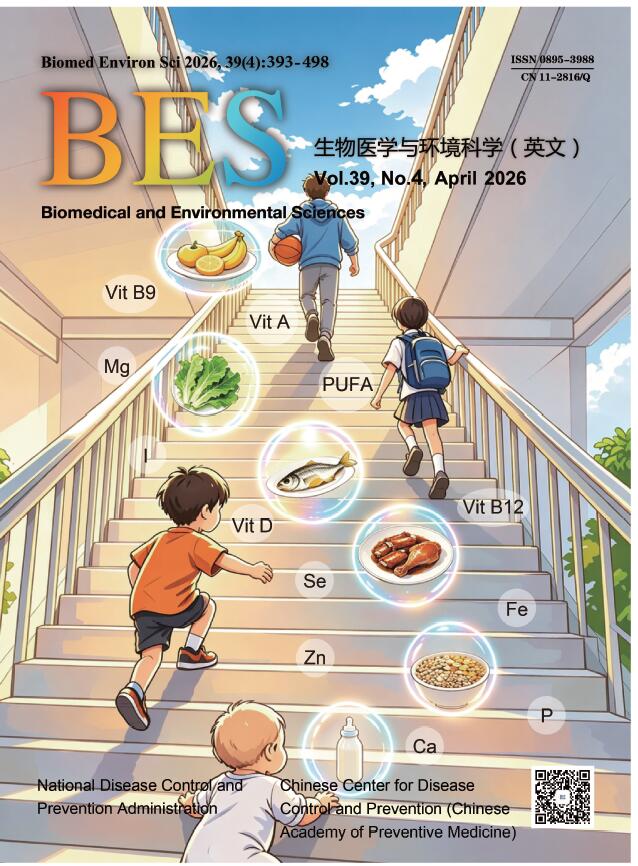
2026, 39(4): 393-395.
doi: 10.3967/bes2026.035
19
2025, 38(6): 716-726.
doi: 10.3967/bes2025.066
Objective Epidemiological studies have shown that vitamin D status affects glycemic control in individuals with type 2 diabetes mellitus (T2DM). However, findings from intervention studies remain inconsistent. Therefore, a network meta-analysis was conducted to evaluate the comparative efficacy of various vitamin D supplementation strategies on glucose indicators in adults with T2DM. Methods Eligible studies published before September 12, 2024, were retrieved from PubMed, EMBASE, Cochrane Library, and Web of Science. A network meta-analysis of multiple dosage strategies—low (< 1,000 IU/day, LDS), medium (1,000–2,000 IU/day, MDS), high (2,000–4,000 IU/day, HDS), and extremely high (≥ 4,000 IU/day, EHDS)—was performed. Results The network meta-analysis of 40 RCTs indicated that, compared with placebo, vitamin D3 supplementation increased 25-hydroxyvitamin D [25-(OH)-D] levels, with pooled mean difference (MD) showing a stepwise increase from LDS to EHDS. Ranking probabilities showed a corresponding rise in 25-(OH)-D levels from LDS (46.7%) to EHDS (91.2%). EHDS reduced fasting blood glucose (FBG) relative to no treatment. LDS significantly decreased hemoglobin A1c (HbA1c), and vitamin D2 significantly affected FBG levels. MDS led to a significant change in fasting insulin (FIN) compared to both placebo (MD: −4.76; 95% CI −8.91 to −0.61) and no treatment (MD: −7.30; 95% CI −14.44 to −0.17). Conclusion The findings suggest that vitamin D supplementation may be a viable approach for improving glycemic control in adults with T2DM, with lower doses potentially offering benefit. The analysis also showed a dose-dependent increase in 25-(OH)-D levels.
20
2026, 39(4): 396-407.
doi: 10.3967/bes2026.027
Objective To characterize long-term transition probabilities in waist circumference (WC) status from childhood into early adulthood and identify critical age windows for the development, persistence, and reversal of central obesity. Methods Using the China Health and Nutrition Survey data (1993–2022), 7,007 WC measurements from 2,440 participants aged 6–17 years at baseline were analyzed. Participants were grouped by baseline age: 6–11, 12–14, and 15–17 years. Generalized linear mixed-effects models were used to estimate WC transition probabilities, adjusting for sociodemographic factors. Results Central obesity prevalence increased from age 6, declined in early adulthood (approximately 22 years), and subsequently increased again. The 6–14-year age window exhibited dynamic, bidirectional transitions; specifically, the 10-year reversal probabilities from central obesity to normal WC were 44.19% (ages 6–11) and 41.39% (ages 12–14), decreasing to 26.93% for ages 15–17. Among those aged 15–17 years with central obesity, boys had a > 80% probability of maintaining increased WC for 20 years. Conclusion Ages 6–14 years represent a critical “reversal period” for central obesity. Interventions should prioritize this window using age- and sex-specific strategies to maximize normalization and curb long-term obesity risk.



















 Quick Links